


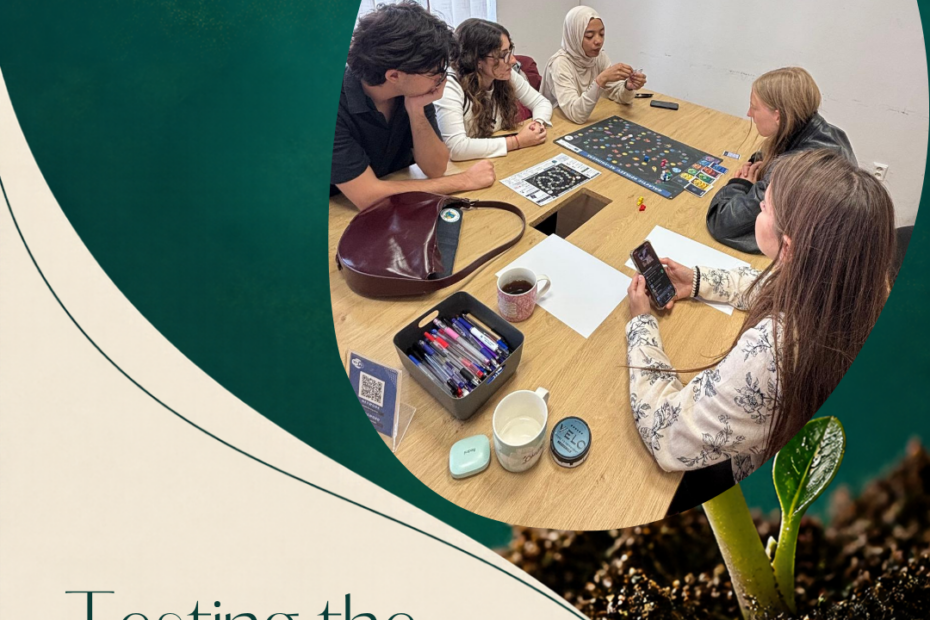
Playtesting: What We Learn
Playtesting is sometimes understood as simply gathering people around a table and asking them to play. In fact, it is a more focused activity. The team wants to understand how people experience the game: what they notice, where they hesitate, which rules they understand and how they interact with one another. Watching the process can reveal details that a written review may not capture.
During a playtest, participants should be able to try the activity in a natural way. The team can observe whether instructions are clear, whether the pace feels comfortable and whether everyone has opportunities to take part. It is also useful to listen to questions and comments as they arise. These moments can show where the design needs more explanation or a different approach.
For YouthCoLab, playtesting is connected with the wider aim of creating a game that supports learning as well as engagement. The team needs to consider whether players discuss the sustainability challenge, practise teamwork and use critical thinking while making decisions. If the activity is enjoyable but the learning purpose is not clear, the methodology may need to provide stronger support for reflection.
The most important result of a playtest is what the development team learns from it. Feedback can lead to clearer instructions, adjusted mechanics or changes to the level of difficulty. It can also confirm which parts are working well. By observing, listening and making improvements, YouthCoLab aims to develop a game that is easier to use and more valuable for young people and educators.
#YouthCoLab #ErasmusPlus #YouthEmpowerment #Sustainability #YouthWork