


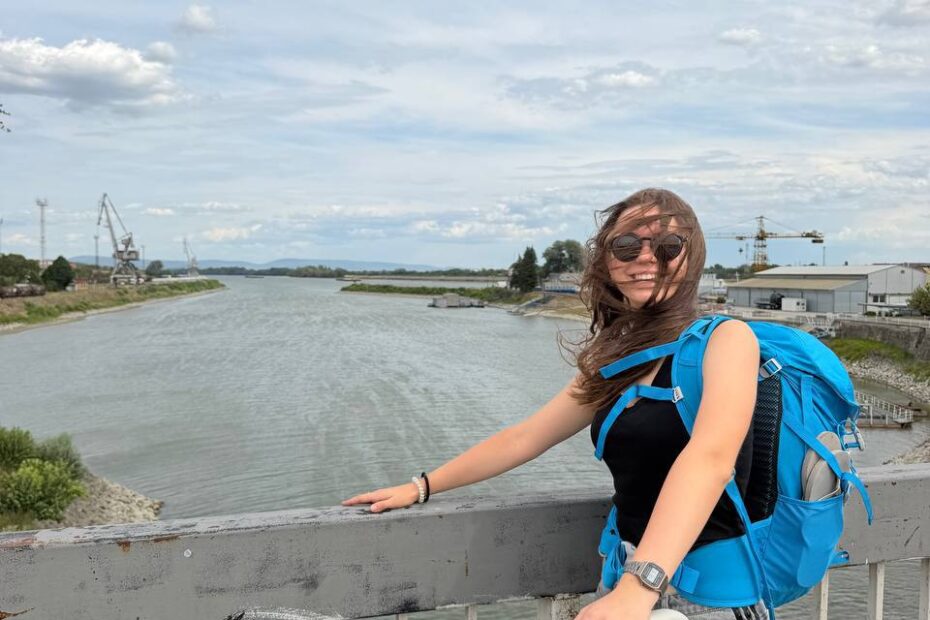
It’s hard to believe that I’m already halfway through my volunteering journey. The past months have been full of new experiences, challenges, people, workshops, events, and plenty of moments where I had to step outside my comfort zone. Looking back, I can see how much I’ve learned – not only about youth work, but also about myself.
Finding My Place
At the beginning of my volunteering, a lot of things were new to me. I had to get used to a new environment, understand how the organisation works, and slowly find my place within the team.
One of my regular responsibilities became social media and promotion. I started creating posts, stories, open calls, reels, and other materials for Instagram and Facebook. Canva became a big part of my everyday work, and even though creating the right design can sometimes take much longer than expected, I’ve become much more confident with it. I’ve also realised how important social media is in youth work – sometimes one post or story is what connects a young person with an opportunity they otherwise wouldn’t know about.
But my volunteering quickly became much more than sitting behind a laptop.
Learning by Doing
Over the months, I started working directly with different groups of young people. I took part in school workshops connected to projects such as Mind Over Screens, Smarter AI, Smarter Youth, and Soft Skills on Green Labour. I also joined activities at Klubovňa, where I had the opportunity to work with teenagers and observe different approaches to youth work.
Working with young people taught me something that sounds simple but is actually quite challenging – every group is different. Sometimes an activity you carefully prepare works perfectly, and sometimes you need to change your plan completely because the group has different energy or interests.
I experienced the same thing while working with younger children during Earth Day and the Učiaca sa Trnava Festival. Keeping children interested while explaining topics such as ecology and waste sorting definitely requires creativity and patience. These experiences showed me why non-formal education is so useful. Games, group tasks, energizers, and hands-on activities can sometimes teach much more than a long explanation.
Little by little, I stopped being only someone who participated or helped and became someone who could actually prepare and facilitate activities myself.
Creating Spaces for People to Connect
Some of my favourite experiences have come from activities where people could simply meet, talk, create something, and enjoy being together.
Together with my co-volunteer, I organised several English Speaking Clubs. We experimented with a new format and introduced activities such as Taboo, speed-dating conversations, describe-and-draw exercises, and different icebreakers. Seeing people become more comfortable and involved as the session continued was really rewarding.
Creativity also became an important part of my volunteering. During our Art Clubs, we tried activities such as beading and painting paper fans. One of the Art Clubs brought together 17 participants, and because the activity was my own idea, it was especially nice to see people enjoying it.
We also organised hiking activities, which had a completely different atmosphere. Being outdoors created a relaxed space where conversations happened naturally and people had time to connect without the structure of a workshop.
These activities helped me understand that youth work doesn’t always have to be something complicated. Sometimes creating a welcoming space where people feel comfortable being themselves is already valuable.
From an Idea to a Festival
One of the biggest experiences of my volunteering so far was City Health Week.
The preparation started long before the actual event. Together with the team, we planned activities, prepared energizers and presentations, and worked on all the small details that eventually had to come together. It gave me a much better understanding of how much work happens behind the scenes of a larger project.
During this period, we also organised a Human Library, where I gave a presentation about Ukraine. Sharing the cultural, historical, and social aspects of my country in an international environment was meaningful to me, but it was also another opportunity to challenge myself with public speaking.
When City Health Week finally arrived, we hosted 10 international volunteers. Suddenly, all the preparation became real. Working with people from different countries brought new perspectives, different ways of communicating, and, of course, situations where we needed to adapt quickly.
The two-day City Health Week festival itself was one of the most intensive parts of my volunteering so far. There was a lot happening at once, but seeing an event we had spent so much time preparing finally come to life made all the work worth it.
Becoming More Confident
Another important moment in my journey was the ESC Midterm Training. It gave me a chance to stop for a moment and actually think about everything that had happened since the beginning of my project.
Meeting other ESC volunteers, including volunteers from Hungary and other countries, was one of the best parts. We exchanged stories about our projects, talked about challenges, and discovered how different the volunteering experience can be depending on the organisation and community.
We also learned more about Erasmus+ opportunities and Youthpass. Thinking about the competences I had developed made me realise that many changes had happened gradually, without me really noticing them.
I had become more confident speaking in front of people. I was more comfortable facilitating groups. I understood better how to structure workshops, choose non-formal education methods, and adapt activities when something wasn’t going according to plan.
Looking Towards the Second Half
As I reached the halfway point, my responsibilities continued to grow. I became involved in preparing workshops for an upcoming Youth Exchange, including activities exploring the connection between sport and stress. Instead of relying only on presentations and discussions, we worked with group activities, energizers, and interactive exercises that would allow participants to learn by actually taking part.
We were also preparing activities for European Mobility Week, including sessions about mobility and urbanism, Erasmus+ opportunities, team building, and different energizers. Being able to move from preparing these activities to seeing how participants actually responded to them taught me a lot about facilitation.
The biggest lesson has probably been that you can prepare everything perfectly on paper, but once you have a real group in front of you, you need to be ready to change things. The energy of the participants, their interests, and the group dynamics matter just as much as your original plan.
Looking back at the first half of my volunteering, I can see a lot of small moments that have added up to something much bigger. I’ve created social media content, organised creative activities, facilitated workshops, worked with children and teenagers, represented my country, helped organise a festival, met volunteers from different countries, and learned more about European opportunities.
But more importantly, I’ve become more comfortable taking responsibility and trusting my own ideas.
There is still another half of this journey ahead of me, with more projects, workshops, people, and probably a few unexpected challenges waiting along the way. If the first half has taught me anything, it’s that some of the best experiences come from saying yes to something you haven’t done before and figuring it out along the way.
And I’m curious to see what the next six months will bring.

